Showing posts with label Infotips. Show all posts

Thursday, January 23, 2014

RG Recipes : Simple & Yummy! - 6

Recipe No. 6 - Boiled Tapioca/Cassava(Ubi Kayu Rebus)


Tapioca or Cassava
Ingredients:

Tapioca - cut into cubes
Clean Water - to boil/cook tapioca
Salt - for taste
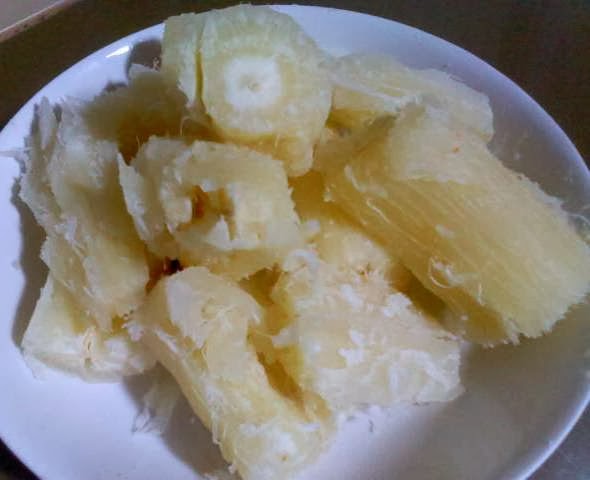


Quick and Easy!

Method:

1. Peel off tapioca skin, cut into cubes and wash it under running water.
2. Boil the tapioca along with water and little salt until it turns tender and well cooked.
3. Drain the water and keep aside for a while(to cooling)
4. Serve it!

It is also can be roasted. How??just throw away into the fire(campfire) and wait for a while till the smell arise. Then remove it away from the fire. Cooling it,,ready to eat! easyy..


Campfire

Personally,,I think it's more delicious compared to those boiled,,,It was a good finger meal plus satiate,,i guarantee you!!,, with the strong smoke aroma that comes out when we start pulling off their brittle hard skin plus fluffy flesh,,perghh! terangkat bro!!

Monday, November 25, 2013

RG Recipes : Simple & Yummy! - 5

Recipe No. 5 - Calabash Soup@ Sup Labu Air

Looks green and  fresh!


Ingredients:

Calabash-cut in a triangle shape
Black pepper-pounded
Garlic
Shallot
Anchovies
Water
Oil for frying
Salt


Tarra,,,!!

Method:

1. Saute anchovies, followed by garlic and shallot
2. Put in a black pepper, fry it for a minute
3. Add in a water, boil it up
4. Then add in calabash, cook it up for 1-2 minute
5. Salt for taste...Done!

Saturday, November 23, 2013

RG recipes : Simple & Yummy! - 4


Recipe no. 4 - Ikan Tengas Masak Asam Rebus


Ingredients:

A tengas fish-clean & cut into 2(without removed the scales)
Pounded lemon grass
Ginger Flower/Torch Ginger Bud@Bunga Kantan
Kesum Leaves
Pounded Red Chillies
Tamarind Skin@Asam Keping
Clean Water
Salt


Method:

1. Marinate a clean fish with a salt and rinse thoroughly for 2-3 minutes(better use calamansi juice), than tose it.
2. Pounded red chillies, lemon grass, ginger flower, kesum leaf and tamarind skin; put all together into a boiling pot(ready with clean water).
3.  Put in a tengas fish. Turn down a heat and boil it up for 10 minutes.
4.  Salt for seasoning and serve!

Tuesday, January 15, 2013

Wild Edible Tree 7 - Kasai

Kasai or its scientific names Pometia pinnata, is the family of  Sapindaceae, such as lychee, longan and rambutan.


It is a large forest tree that can reach a height up to 18 meters. Its trunk's diameter could reach 100 cm, depending on the location of environmental conditions. It can be found in secondary forests up to 1000 m altitude.


Also known as Matoa in Indonesia and Tava (Samoa) can grow well in dry soil with a natural distribution in Southeast Asia and the Pacific islands.


When young, the fruit is light green and clumps like longan fruit. Over time, pieces will change to red shampoo gingery up dusky red when fully ripe.


Fruit skin is quite fragile and easily broken if bitten. The flesh is very thin and clear white-like longan pulp. It tastes very sweet but not easily cracked from fruit seeds.


 In the old days, its bark is used for treating fishing nets to be more durable. Fishing nets are dipped and soaked into the stock of dried bark to prevent the nets from decay.

RG Recipes : Simple & Yummy! - 3

Recipe No.3-Sardine Curry 


Ingredients: 

1 large(425gm)Canned Sardine 
1 tablespoon of chopped shallot 
1 tablespoon of chopped garlic 
Ginger-1 piece/chopped 
A sprigs of curry leaves 
A packet of fish curry powder 
Coconut Milk-1/2 cup 
100ml of tamarind juice 
Salt, to taste 
Cooking Oil-As required


Method: 

1. Remove sardines from can, retain the sardine sauce inside. 
2. Heat frying pan and fried sardines(with a bit of cooking oil)until both sides turned brown, then put fried sardines aside. 
3. Heat cooking oil again and fry shallot, garlic,ginger and curry leaves till fragrant. 
4. Add in fish curry powder(mixed with a little water)then followed by sardine sauce, stir it till the oil rises to the top. 
5. Add in tamarind juice then followed by a potato. Cook for 2-3 minutes. 
6. Once it boiled, add in fried sardines followed by a coconut milk. Cook for another minute. 
7. Dish out, serve hot with steam rice or a loaf of bread. Yummy!!

Thursday, January 3, 2013

Wild Edible Tree 6 - Ara

Pokok Ara or in english as Elephant Ear Fig Tree. Its scientific names is Ficus auriculata, under family of moraceae. It can be found in lowland rainforest(mixed deciduous and secondary) up to an altitude of 1300m. 

Easily found, especially on the riverside.
Fruits bearing on the trunk of the tree and commonly very dense.
When ripe its fruits will dark red in colour and fragrant.

Fruit contains high levels of calcium and minerals. Local people use it as ingredients in traditional dishes especially lamb curry. A favourite  among the anglers to use it as a bait for freshwater fish. Awesome!


Tuesday, December 11, 2012

Wild Edible Tree 5 - Tampoi

Tampoi; scientific names was Baccaurea macrocarpa is under Phyllanthaceae family. Local also named it as Larah, Terai, Rambai Hutan, Setei or Terai.


It can be found in the secondary forests up to 1000m altitude. Categorized as sub-canopy tree up 10 to 15 m tall and 47 cm dbh. Popular in Peninsular Malaysia, Sumatra, Borneo (Sarawak, Brunei, Sabah, West-, Central-, South- and East-Kalimantan)


The trees bear fruit directly on the trunk and large branches. The fruit is large, orange-skinned, white-fleshed, with a delicious sweet tangy flavour.


The fruits are edible.

Wednesday, November 21, 2012

Wild Edible Tree 4 - Terap Hutan

Its scientific names is Artocarpus Odoratissimus. Local also named it as Marang, Tarap or Madang. Under family of moraceae as same as jackfruit, bangkong and breadfruit. 


It can be found in secondary forests up to 100 m altitude(easily found in Sarawak forest) and able to grow to a height of 25m. Evergreen tree with 40 cm in diameter, sometimes with low buttresses. 


It is smaller in size when compare to those grown in orchard or villages. Its colour remain greenish when ripe. The fruit has a strong scent, and is considered superior in flavour to both Jackfruit and Cempedak. Tasty mild creamy,almost juicy banana. The seeds are also edible after boiling or roasting.


Research has been done for its biosorption capability and great results is found. The findings is surely benefiting mankind. Awesome!

Thursday, November 15, 2012

Wild Edible Tree 3 - Bangkong

Bangkong , its scientific names as Artocarpus integer var. silvestris Corner . Categorized as a family of Moraceae. Local people especially in peninsular also called it as Baroh.


In Sabah and Sarawak it was called Banturung manuk, Bukoh, Mengkahai, Nakan or Pulutan. Typically similar to the jackfruit especially its leaf and fruit.

Similar to Jackfruit


It can be found in typical malaysian forest up to 600m altitude but lately difficult to be found maybe due to extinction. Its alco can be found in Thailand, Peninsular Malaysia, Sumatra, Java, Borneo (throughout the island), Celebes, Moluccas, New Guinea.


The fruits and seeds are edible. 

Sunday, November 4, 2012

Wild Edible Tree 2 - Rattan Tree

Rattan Tree

Rattan or  rotan in local name is easily found in Malaysian rainforest. Its scientific name is Calameae  and it is under Arecaceae famili. It can be found at different altitudes, from sea level up to 3000 meters elevation.  

Rattan Fruit

There are 140 species of rattan in Malaysia and most popular is manau. Today it is grown commercially for use in the furniture industry.

Ripe Fruit

Its fruit is not tasty, tangy-sour chelate but enough to provide the energy needed during emergency. Ho ho ho!

Wednesday, October 24, 2012

Wild Edible Plants

It is important for us to know little bit about the plants surrounding us when we are in the forest. To know either edible or poison is foremost. Normally we would fully appreciate these skills when we are in trouble .. short of food or lost in the forest.

Under posting tittle, "Wild Edible Plants" we will list several plants those are very helpful when we faced trouble in the the forest.


Wild Edible Plants  1 - Lemba Tree


Lemba Tree

Its scientific name is Cucurligo Latifoliaini. Local also naming it as Pinang Puyuh . They are easily found at low land forest where it is shady and well sheltered from direct sunlight.

Fruit Bunch

Its fruit can be eaten and containing a very sweet liquid similar to milk. Its sweetness could last untill 2 days! During childhood we for sure eat it before we eating sour or bitter fruits. 


Lemba Fruit


In medical it is use as one of herbal medication for headache and ulser treatment. Also good for diabetic. Awesome!

Tuesday, October 23, 2012

RG Recipes : Simple & Yummy! - 2

Recipe No. 2 - Murtabak Cintan


Murtabak Cintan


Ingredients :

2 packets of  Instant Noodle(preferably Cintan Brand)
3 chicken eggs
1 onion, sliced
1 stalk of spring onion, chopped
1 sachet Cintan seasoning(preferably Curry flavour; it comes along with noodle packging)
1 red chillie, sliced
salt, to taste
1 tablespoon of cooking oil

Method :


Boil Cintan noodle in water over low heat until tender. Loosen it and drain well.
Add in onion, chillie, onion spring and Cintan seasoning into a bowl of battered eggs, stir it well.


Then mix the noodle well together with the other ingredient which been prepared previously in the bowl.

Heat cooking oil in a frying pan and add the mixture. Cook over low heat untill  mixture is firm , then flip it  and fry the other side. Serve immediately..that's it!

Monday, October 22, 2012

RG Recipes : Simple & Yummy! - 1

When in the jungle we often think to prepare quick, simple and delicious food. We thought, too much time for cooking is not practical especially in jungle. Everything must be short and simple...better focus more for fishing activities :). This, what we called "a quality time" when fishing in the jungle! 

Start from today we will share the top ten of the most simple and delicious recipes that we think you should try when in the jungle...check it out!

Recipe No. 1 - Sambal Goreng Ikan Bilis Cili Burung


Ingredients

Item A 

20 green chillies(preferably thai chilli or cili burung)
2 tablespoon of anchovies@ikan bilis
2-3 shallots 
2 cloves of garlic 

Item B

2 tablespoons of cooking oil 
1 tablespoon of sweet soy sauce 
little bit sugar and salt, for taste 

Note:  Pound item A coarsely

Method: 

Heat cooking oil, and fry the item A until the oil rises to the top. Lower until the heat midway, and stir occasionally. Put in sweet soy sauce then season with salt and sugar. Serve immediately..that's it! 

Sunday, January 30, 2011

Tracking Signs...siri 4


Gambar 1


MAKLUMAT 4 TAPAK/LANGKAH MENGIKUT ARAH TANDA PANAH@Message 4 Paces This Way


Tanda ini menunjukkan arah kepada suatu maklumat atau mesej tersembunyi. Bentukkan dengan ketul batu seperti kotak dan buatkan arah anak panah ke arah mana maklumat atau mesej tersebut. Di dalam kotak tersebut letakkan beberapa ketul batu mewakili berapa langkah tapak yang perlu dilakukan untuk sampai ke tempat tersembunyinya maklumat atau mesej tersebut. (Contoh gambar : 4 tapak diperlukan)


Gambar 2


SUDAH PULANG@Gone Home


Ini adalah tanda yang penting. Tanda ini adalah sewajarnya sebagai satu tanda terakhir yang mengisyaratkan bahawa jejak atau aktiviti sudah tamat.

Sunday, January 23, 2011

Tracking Signs..siri 3


Gambar 1


HALANGAN DI HADAPAN/MELINTAS HALANGAN@Obstacle Ahead/Cross Obstacle


Gambar 2

KUMPULAN BERPECAH “2 KE KANAN, 4 TERUS”@Split Group “2 Went Right, 4 Went Straight”

Tuesday, January 18, 2011

Tracking Signs...siri 2


Rajah 1 – BELOK KIRI/KANAN@TURN LEFT or TURN RIGHT

Tanda arah ringkas sebagaimana tanda “Arah Sini”. Pastikan dibuat tanda bengkok@belok yang jelas.

Rajah 2 – PUNCA AIR DI HADAPAN@WATER AHEAD

Bentuk garis riak gelombang dari ranting kayu bermaksud riak gelombang di permukaan air. Pastikan tanda anak panah yang jelas yang menunjukkan arah punca air tersebut. Paling minimum tiga garis riak gelombang diperlukan untuk menunjukkan mesej atau maksud tersebut.

Wednesday, January 12, 2011

TRACKING SIGNs...siri 01


ARAH SINI @ This Way

Rajah 1(i)

Letakkan seketul batu besar dan satu ketul batu kecil di atasnya. Kemudian letakkan seketul lagi batu kecil yang menunjukkan arah yang dimaksudkan disisi batu besar tersebut.

Rajah 1(ii)

Atau gunakan ranting/dahan kayu yang dibentuk menjadi anak panah yang diletakkan atas lantai tanah sebagai tanda arah yang dimaksudkan.
Boleh juga mengikat rumput panjang(cth: lalang) dan tundukkan ia ke arah yang dimaksudkan atau membuat satu tanda pada ranting pokok/tumbuhan(cth: patahkan ranting) dan arahkan tanda tersebut ke arah yang dimaksudkan.
Pastikan tanda-tanda tersebut adalah jelas dan mudah dilihat.

DILARANG MASUK/BAHAYA @ No Entry/Danger

Tanda ringkas yang berbentuk “X” yang diperbuat dari ranting atau dahan pokok atau ketul batu yang mengingatkan orang ramai agar tidak melalui laluan yang dimaksudkan atau memberi amaran kawasan merbahaya.
Pastikan tanda tersebut adalah jelas dan mudah dilihat.

Tuesday, January 4, 2011

Perkhemahan Siri 3..


Penyusunan tapak perkhemahan penting untuk memberikan keselesaan dan ianya mengambil kira faktor keadaan muka bumi kawasan tersebut. Bagi kawasan yang sempit dan memanjang mendirikan khemah dalam satu barisan dianggap sesuai. Walau bagaimanapun jika kawasan itu agak lebar, dua barisan perkhemahan adalah lebih baik. Untuk kawasan yang lapang sistem bulatan merupakan susunan yang paling sesuai. Manakala bagi kawasan yang muka bumi tidak menentu, keadaan tapak perkhemahan secara berselerak bolehlah dipraktikkan mengikut keadaan tempat tersebut.


Bagi kemudahan serta keselamatan ahli-ahli perkhemahan, kawasan khemah hendaklah dipagar dengan tali sempadan dan diadakan tali penghubung di antara pusat tapak perkhemahan dengan tempat-tempat penting terutamanya punca air dan tandas.

Etika Perkhemahan


1. Pastikan sampah-sarap terutama bekas plastik, polystyrene dan tin dibawa keluar setelah tamat aktiviti perkhemahan dan dibuangkan ditempat pelupusan sampah yang betul. Sampah-sarap ini terutama plastik dan polystyrene merosakkan ekologi dan persekitaran semulajadi.


2. Unggun api hendaklah dipadamkan sebelum bergerak meninggalkan tapak perkhemahan setelah selesai aktiviti tersebut. Ini untuk elakkan kebakaran hutan.


3. Jika ingin mendapatkan sumber sungai untuk makanan khususnya ikan maka wajiblah para ahli perkhemahan elak menggunakan kaedah meracun(tuba), bom ataupun current(electrical shock). Ambillah yang perlu sahaja dan amalkan Concept Catch & Release(CAR) terutama spesis terancam(cth: Kelah) demi kelangsungan stok ikan tersebut untuk generasi mendatang.

Tuesday, July 27, 2010

Perkhemahan Siri 2...


JENIS-JENIS KHEMAH

a. Khemah Berangka


Khemah ini sesuai untuk kawasan-kawasan yang mudah sampai kenderaan untuk pengangkutan membawanya. Khemah ini merupakan khemah berangka pasang siap. Popular di pasaran dan juga kepada pengemar outdoor yang inginkan lebih keselesaan.

b. Khemah Rabung Pasang Siap

Khemah bentuk ini mempunyai 2 batang tiang dan sebatang alang. Dua batang tiang untuk menyokong alang manakala alang pula menyokong bumbung dan keseluruhan struktur khemah tersebut. Di hujung khemah dikuatkan dengan ikatan pancang atau pokok. Agak simple dan boleh dipasangkan dengan mudah menggunakan kain khemah dan kayu-kayu yang terdapat di kawasan sekitar. Khemah ini terdapat banyak di pasaran.

c. Khemah Dinding

Khemah ini biasanya mempunyai kain khemah yang digunakan sebagai dinding dan bumbung. Ianya juga dipanggil "pisang sesikat". Popular untuk kapasiti penguni yang besar jumlahnya.


d. Khemah Rabung, Gantung dan Kepelbagaian Poncho


-Rabung-

-Gantung-

Paling mudah, ringkas dan sesuai terutama bagi aktiviti perkhemahan persinggahan sekejap -sekejap untuk beristirehat, kawasan cerunan serta sukar.

Aplikasi Kepelbagaian Poncho..


...bersambung